Showing posts with label Wired Weekends. Show all posts

28 November 2009

Clear

November 23, 2009, a Monday, has been declared a holiday in our company --as with most of the other companies here in Japan. I didn't care much as with why it is a holiday, my only concern is that I have no work on that day and I can enjoy a rare long weekend [Okay I did a quick research just before I write this. It is Labor Thanksgiving Day and is celebrated as an imperial harvest festival called Niiname-sai].


A couple of nights prior to that particular Monday, I was staying up all night and until dawn. But I had to get up early, especially on Sunday because I have to go to church. Thus, depriving myself of sleep, which of course I do not really mind because I know I could still catch up with it for I do not have any plans for the following day but stay home and enjoy the holiday.


And catch up I did. I slept for 10 hours from Sunday night until Monday noon, which I feel is still not enough. When I woke up, I noticed that I have missed calls on my cell phone. Ronald Julian, one of my closest friends, called and so I gave him a ring and asked why he called. He asked me if I want to go back to the Skywalk in Yokohama and take photos of the Minato-Mirai with Mt. Fuji as its backdrop. The sky was very clear that day so I reckoned it's a good idea.


Almost a year ago, we tried to shoot the very same view because we had a fair weather and there was a clear blue sky. Well, that's what we thought. When we got to the viewing deck we noticed a very large cloud formation right between the city line and the famous Japanese volcano. We were so disappointed because we were not able to have a shot of the city with Fuji-san in the background. We settled for the Yokohama City's night captures but even that was disappointing due to gray clouds hovering on the entire skyline.


This time, the clouds just cleared the Kanto area of Japan so we were expecting a good view of Mt. Fuji behind one of the famous Yokohama City landmarks, the appropriately named Landmark Tower. Because I overslept, and I had to do the laundries before leaving my pad, I arrived in Yokohama at around 4pm. Ronald and I took the first taxicab en route to the Yokohama-Bay-Bridge-based Skywalk. While in the cab, we anxiously look at the horizon to check if we could still make it to the view deck just before sundown. At 4:30pm, at this time of the year, the sun is already setting down so we know that we have very little time to take photos of the view. Once we got there, after paying the cab driver, we hurried up to the deck.


We made it just in time to witness the sunset. There was a spread of thin clouds just below the tip of the scenic volcano. Just enough to catch the sight of the cone silhouette before the fading rays of the sun. Right there, we’re satisfied with what we saw and what we got. This scene that we have been hoping to catch at the flick of the shutter of our cameras just made us cast a smile in our faces and within us.


The photo above shows the view of the Minato-Mirai 21 (Port Future 21) from the Skywalk view deck, again with the silhouette of Mount Fuji behind it. The tallest structure being the Landmark Tower, the tallest building in Japan. In front of it lies the Cosmo World, an amusement park opened in 1989. It houses the Cosmo Clock, the biggest Ferris Wheel in the world at the time it was opened. On the right of the Ferris Wheel, three identical buildings with their height arranged in descending order, is the Queens Square Yokohama. The Pacifico Yokohama, one of the most expensive hotels in Japan –or maybe in the whole world, is on the farthest right in the photo. Aside from being a luxury hotel, it was made famous by its distinct crescent-moon shape. Also in this picture, but cannot be clearly seen, is Akarenga Kokusaikan (Red Brick Warehouse), a two-building red brick structure with its original facades (about 100 years old) refurbished from top to bottom.
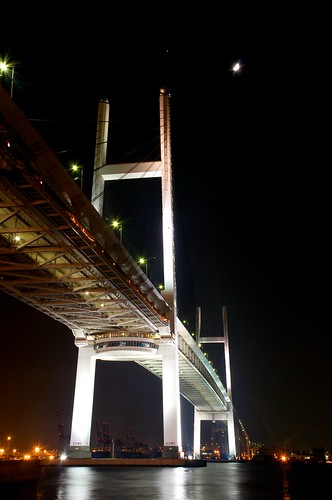


The Yokohama Bay Bridge, inaugurated also in 1989, is an 860-meter long bridge in the ports of Yokohama City. It houses the Skywalk viewing deck which gives one of the best vantage points looking into the Minato-Mirai 21.


What we hope to capture next in the Skywalk is the same scene, but with Mount Fuji clearly revealing its snow-capped summit.

26 November 2009

Ride to the Future

Japan, probably the epitome of a country of modern technology, is one of the leading nations in the fields of scientific research.  With that being said, I am actually very grateful that I am here and that I was able to explore and experience the technologies [and the rich heritage, culture and tradition of course] of the Land of the Rising Sun.


The country, lying on East Asia, is very well known for many things. Anime (Japanese animation), Manga (Japanese comic books/strips), Samurais, Ninjas, kimono, ramen and sushi just to name a few. But there is also one other thing that really made Japan known throughout the world. Cars.


Japan is home to the world's largest automobile manufacturer in terms of sales; that being Toyota. And Japanese cars seem to be roaming the roads of the Earth more than any other nation-classified car. This continuously rising country is also home to the Tokyo Motor Show which is considered by the auto press as one of the Motorshow's "Big Five" alongside Detroit, Geneva, Frankfurt and Paris.


The Nissan GT-R


Tokyo Motor Show, or TMS, is the grandest automotive exhibit in Japan, usually held at the end of October to early November of each year, in Makuhari Messe, Chiba Prefecture, which has been its venue since 1989. It showcases the latest trends and innovations in the industry and gives a glimpse of the future vehicles in the form of concept cars, designs and technologies. The first motorshow that I have attended is the TMS 2007 wherein all the major carmakers from all over the world participated. I got a free entrance ticket and a meal coupon from my employer, so it felt a lot better going through all the hassles on the way to the show. It was one heck of an experience for me and I was thrilled to see the following year's exposition. Unfortunately though, the organized event skipped the year 2008 so we went on to look ahead to 2009.


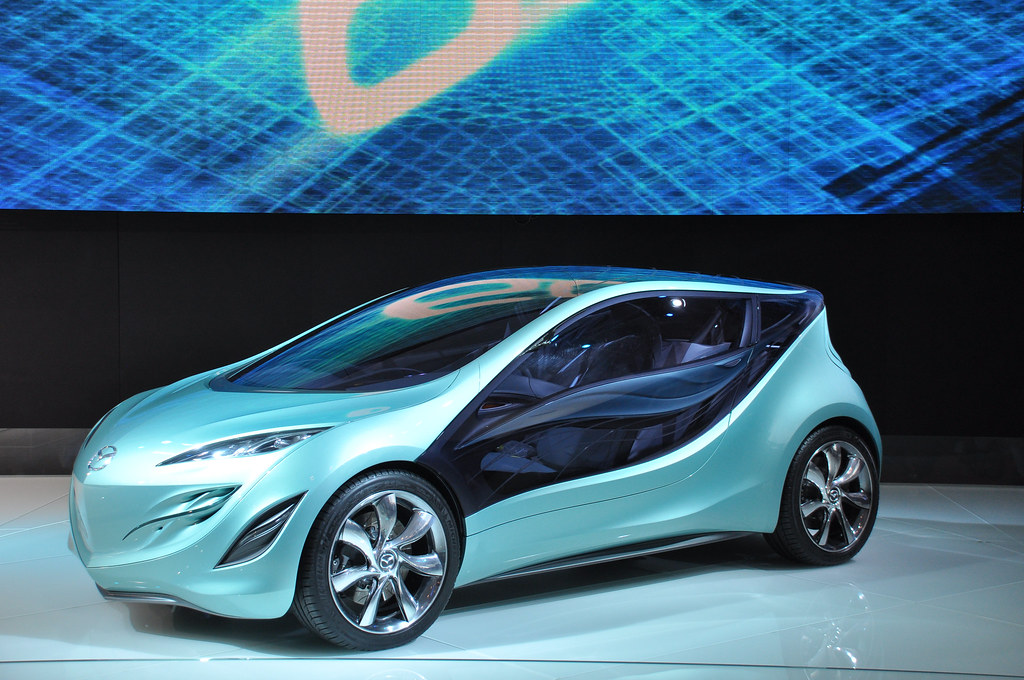
Mazda concept cars have been seen as futuristic in appearance.


The company that I have been working for during the past three years and a half, again has provided two tickets, two meal coupons and reimbursable transportation allowances for two worth 2000yen each, for the 2009 edition of the much-awaited affair. I invited two friends (a fellow photographer and a friend from church), so they split the freebies. One gets the entrance ticket and the other gets the meal stub. The ticket and the stub are of the same value so they both get a fair share. I get the transportation allowance though.


Days before the show, I have learned that only Japanese carmakers will be participating this year, so it's quite disappointing as we will not be seeing Ferraris, Porsches, GMs and Lamborghinis among others. But to be fair, it's really understandable considering that the automotive industry is one of the sectors badly and hardly hit by the global economic crisis. And on the way to the show, I can't help but notice the vast difference of the commuters trying to get to the location this year as compared to that of 2007. Not very much people seem to be interested enough, or just to take time to see the displays and presentations. Unlike two years ago, when we really had a hard time getting on and off the trains; and took us about 30 minutes just to get out of the station. This year, it was rather easy and comfortable. Not that I'm complaining about it. But there's a sense of urgency that this current crisis is hitting every aspect of people's lives.


As they always say, the show must go on. And so shall we. The 41st presentation of the Tokyo Motor Show highlights the new breed of automobiles. The hybrids and the eco-cars. Hybrids, as most of us know it, are vehicles with the capacity to run on two or more power sources. The most common hybrid, which the term hybrid usually refers to, is a vehicle with a combination of an internal combustion engine (ICE) and an electric motor. Meaning, it runs on electric power and petroleum fuel. Eco-cars, or more commonly known as electric vehicles, on the other hand, are vehicles that run completely on electricity with the use of powerful rechargeable batteries. This has been the latest trend in the car industry as majority of the car manufacturers try to offer the cleanest and the most environment-friendly vehicles, as they [manufacturers] also try to solve or contribute in the pollution-reduction in our surroundings. Major players in the industry intend to project to the consumers the effect of using these eco-cars and hybrids and they do their best to keep the people aware of the purpose and impact of the latest and the future automotive products.


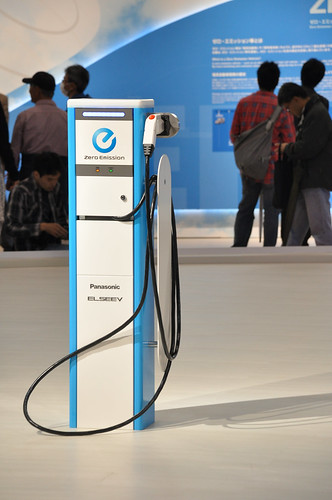
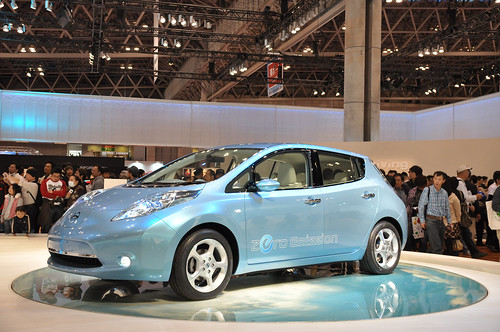
An EV (Electric Vehicle) Recharging Station
at the Nissan Exhibit Area bears the slogan "Zero Emission".


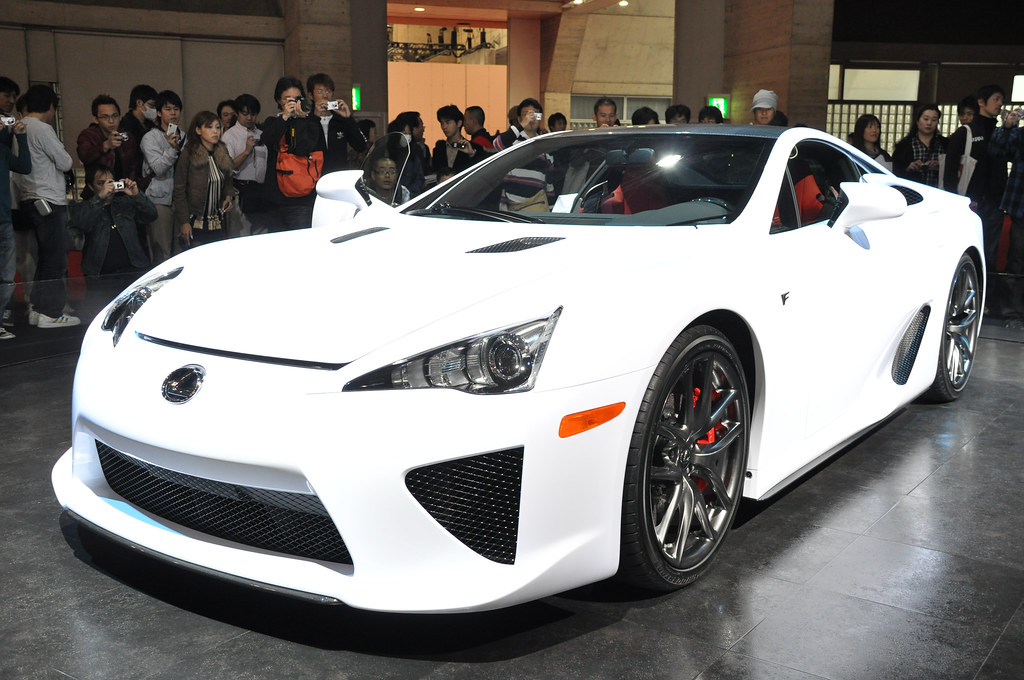
Still, the TMS wouldn't be complete without the conventional cars, the SUVs, the Crossovers, and of course, the jaw-dropping and ever-drooling sports cars and supercars. One of the highly anticipated supercars to date is on display in this year's show, the Lexus LF-A. It is Lexus’ first supercar that has been developed in the past 9 or 10 years.


The Lexus LF-A


Also on display is the Nissan Fairlady Z Roadster, which is launched with the 40th Anniversary Edition of the Fairlady Z. This machine, which I got the chance to feel the cockpit, is one beautiful beast. I just love the curves of this sports car and the peculiar details it presents.


The Nissan Fairlady Z Roadster during a test drive.


The Fairlady Z Roadster Cockpit.


Nissan Leaf Electric Vehicle


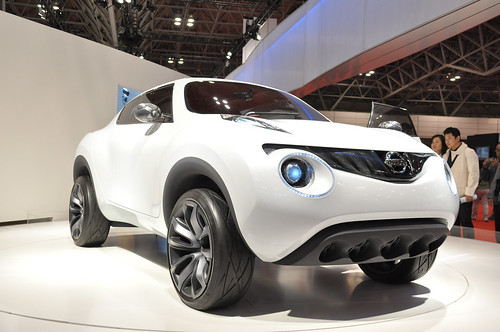
Nissan Qazana


The Qazana Rim


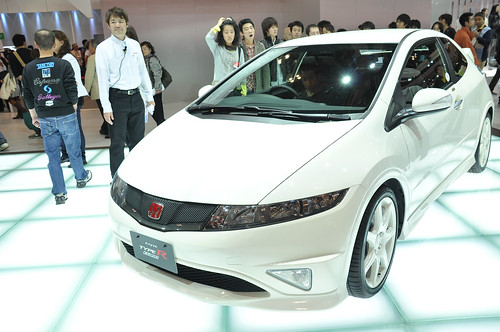
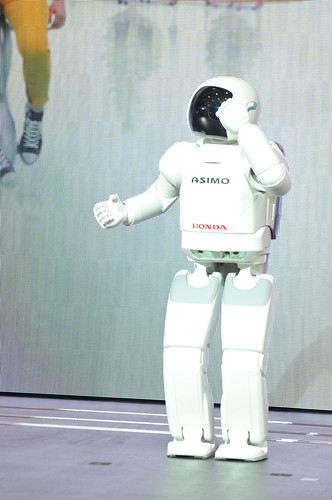
Honda highlights its own line of machinery with the introduction of the Honda Skydeck, the Civic Type-R Euro and the CR-Z. Also in attendance is the popular ASIMO (Advanced Step in Innovative Mobility), a humanoid robot created and developed by Honda. This is actually my first time to see this robot up close.


Honda Civic Type-R Euro


Honda CR-Z


Honda Skydeck


ASIMO


ASIMO dancing


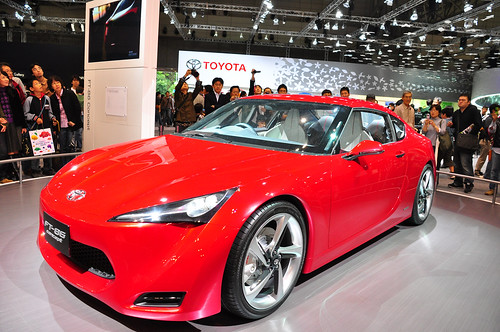
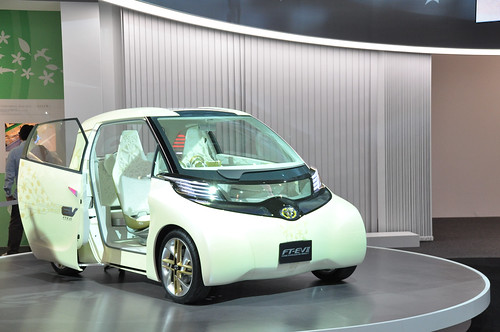
Meanwhile, Toyota showcased their exhibit with the FT-86 and the FT-EVI. There is not much that I know about these cars and pardon me for not doing some research. (I just want this entry get done already…if you noticed it’s too long already!)


Toyota FT-86


Toyota FT-EVI


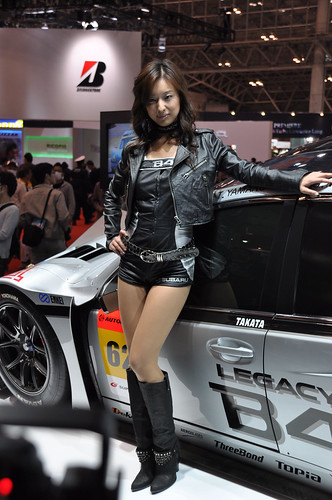
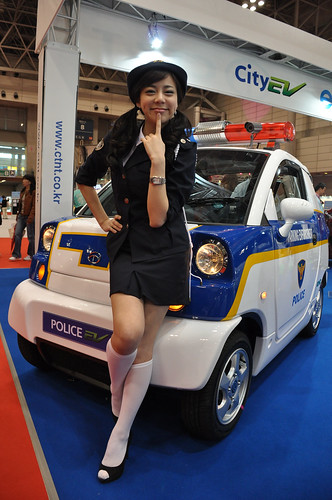
And, a car show would not be so if there were no Race Queens and other girls who strut their stuff along side these heavy machines. Tokyo Motor Show is no different of a car show as it is also the abundance of beautiful and sexy ladies. Then again, comparing to 2007’s run of this show, it would seem that hot, beautiful and sexy girls are also affected by the crisis as there were very few that could be seen in this year’s car show.


There are just too many kinds of vehicles and technology showcased in this year’s presentation of the Tokyo Motor Show. The very impressive and innovative developments in the car industry is just simply outstanding, yet, all in all the show itself is not as promising as before. Fortunately, Japan, the automotive industry in particular, is already recovering bit by bit from the economic slump. Hopefully, as always, we are looking at a brighter future of automobile innovations.


One of the non-car type vehicles in the TMS, the Honda CB1100


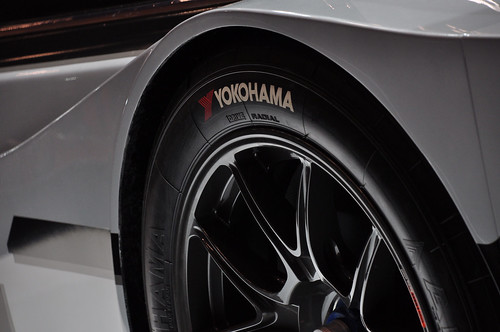
The brake system of the Honda VFR 1200F up close


More pics here.

05 October 2009

Three Words: Trigger

Like what I've said in my previous post, I am posting the Three Words entry into three parts. I wrote about my latest hobby addiction last time, photography; and this time I will be talking about a passion that has been with me since I was a kid.


Trigger
Airsoft and airsoft guns originated here in the Land of the Rising Sun in the 1970’s when the Japanese government made it illegal to own or possess a real steel firearm. The Japanese had a lot of interest in firearms and weaponry though, so manufacturers produced replicas of real firearms that shoot plastic pellets or BBs(ball bearings). With a wide range of models of these guns, any gun fanatic or enthusiast can surely get the class that he/she likes. Third party manufacturers, mainly for aftermarket/upgrade parts has been popping out like mushrooms on the ground as they try to offer the best modifications to almost any airsoft weapon. This has been limited by the Japanese government due to some incidents involving the use of airsoft guns for pranks in the public. Therefore established is the Sword and Gun(or vice-versa?) Law, which limits the power of any airsoft gun to just 0.98joules(approximately 98m/sec using 0.20g BBs). The average stock gun has a ballistic speed of 84-86m/sec.

Just about any boy has played “cowboys and indians”, and I was no different. I grew up playing toy guns, improvised or not, with my brother and my cousins around our neighborhood. It was fun, having to imitate those heroes from TV like the Lone Ranger and some animated shows.

Airsoft is just about the same, only this time it’s “toys for the big boys”. This extreme sport is an honor game of honesty, strategies and camaraderie. Known to be a “gentleman’s game” (though its widespread popularity has influenced and encouraged many ladies to join), airsoft is a military simulation game using toy/replica BB guns with a general rule of having 2 teams trying to outplay one another either by “killing” the opposing team’s members or capturing the flag of the opposing team.

Any player who got hit by an enemy(or a teammate in some cases) is considered out/dead. The player who got hit should acknowledge and call himself/herself out of the game by shouting “HIT!” then raising his/her hand(and the weapon) for other players still active on the game to know that he/she is already dead thus will not try to shoot at the dead player anymore. Generally, any hit on any part of the body(including gears and everything attached to the player’s body except the gun) is considered a hit. Only direct hits are counted therefore discounting ricochets.

Airsoft games also put so much priority to safety. A player should have at least a proper eye or face protection before he/she can play the game. Other accessories like grenades(working or dummy) are optional.

As for me, I have been introduced to airsoft at an early age. I was in 6th grade then when these spring powered airsoft guns, mostly handguns, started making their way to public markets in the Philippines. Gas powered guns are also available but they are too expensive. I remember buying my first ever airsoft pistol, a Colt M1911A1, on December of 1993. We’ve done some skirmishes with friends and some relatives.

But I have never played organized airsoft until February 29, 2004, when then fellow newbies, one veteran pointman and myself formed a team based in my hometown Cavite, the Special Warfare Airsoft Group (SWAG). It pays homage to the real SWAG (Special Warfare Group – the Philippine equivalent of the US Navy SEALs) a branch of the Philippine Navy, also stationed in Cavite. From then on, I was practically playing on every weekend possible. When I came here in Japan, I got acquainted with fellow Filipinos whose passion for airsoft is just as deep as mine, thus we formed the first ever recognized Filipino airsoft team in Japan. We named it Team PAIN Japan (Pinoy Airsofters In Japan).